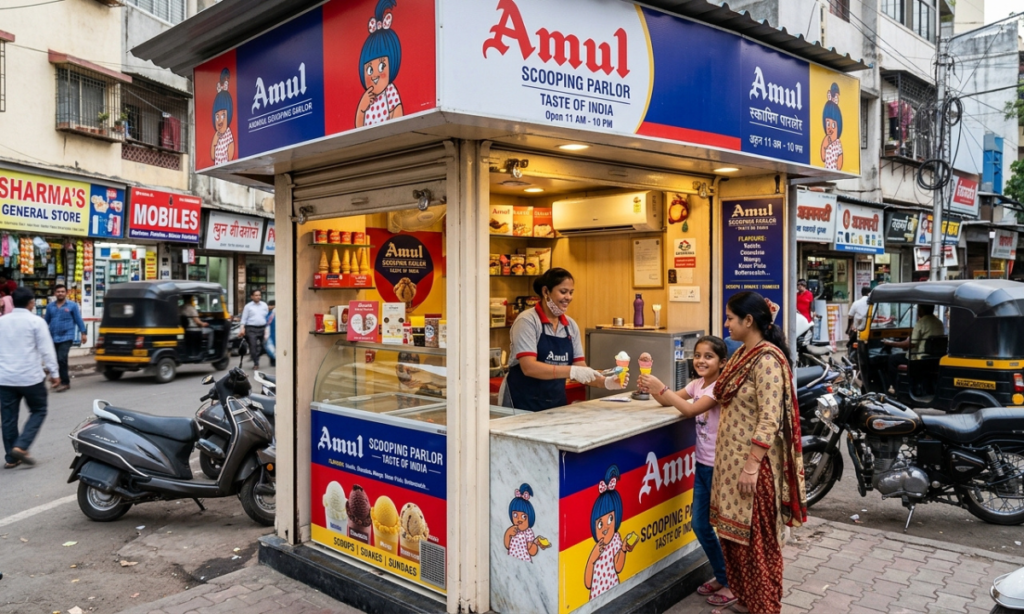

Starting a business can be challenging when you have to build a brand, create operating systems, find suppliers, attract customers, and manage everything from the beginning. A franchise offers a different approach. Instead of developing an entire business model independently, a franchisee operates under an established brand and follows the systems and conditions agreed with the franchisor.
For entrepreneurs exploring a small franchise business in India, this model can be an option worth researching. However, a franchise is not automatically inexpensive, risk-free, or profitable. The investment, responsibilities, support, fees, and expected performance can vary significantly between businesses.
This guide explains what a small franchise business means, the types of franchises you can consider, the costs to examine, how to choose an opportunity, and the important checks to make before investing.
What Is a Small Franchise Business in India?
A small franchise business generally refers to a relatively small-scale franchise operation. It may be a compact food outlet, education centre, retail store, beauty business, or service-based operation.
The term “small franchise” does not represent one specific legal business category in India. The size of a franchise can depend on factors such as the premises, investment, number of employees, equipment, operating model, and scale of the business. Small franchise business in Indiais also important not to assume that a small franchise always requires a small amount of money. The total financial requirement can include franchise fees, premises, equipment, interiors, staff, inventory, technology, marketing, licences, deposits, and working capital.
How Does a Franchise Business Model Work?
In a typical franchise arrangement, the franchisor gives the franchisee permission to use specified business assets, such as a brand name, trademarks, products, services, systems, or operating methods.
The franchisee generally invests in setting up and running the business and agrees to follow the terms established in the franchise agreement. Depending on the business, the agreement may cover branding, territory, suppliers, training, marketing, fees, operating standards, renewal, termination, and other responsibilities.
The exact terms can differ considerably. That is why an entrepreneur should study the actual franchise agreement instead of relying only on information provided during a sales presentation. A franchise should be viewed as a contractual business relationship, not as a simple purchase of a popular brand name.
Why Small Franchises Are Growing in India
Franchising gives entrepreneurs an alternative to creating every part of a business independently. An established franchise system may already have a brand identity, operating procedures, product standards, training processes, and marketing methods. This can make the model attractive to people who want a more structured starting point.
At the same time, popularity of franchising should not be confused with a guarantee of success. A franchise still depends on local demand, competition, operating costs, management, location, and the specific terms offered by the franchisor.
Why Start a Small Franchise Business in India?
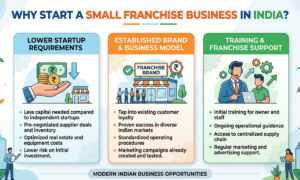
A small franchise can be worth considering when an entrepreneur wants to operate within an established business framework rather than develop an independent concept from the ground up. The decision should be based on the individual franchise opportunity, not simply on the popularity of the industry or brand.
Lower Startup Requirements
Some small-format franchises can require less space, equipment, inventory, or staff than larger business formats. However, there is no standard investment amount that defines a small franchise business in India. Before deciding whether an opportunity is affordable, calculate the complete startup requirement. Consider the franchise fee, property deposit, rent, interiors, equipment, inventory, licences, employee expenses, technology, marketing, and working capital.
Established Brand and Business Model
One potential advantage of franchising is access to an existing brand and business model. A new independent business may need to spend considerable time establishing its identity and developing operating procedures. A franchise may already have these elements in place.
However, the value of an established brand depends on its reputation, customer demand, business systems, and the actual support provided to franchisees. An entrepreneur should therefore investigate what the franchisor is offering rather than assuming that the brand name alone will bring customers.
Training and Franchise Support
Training and support can be important reasons for choosing a franchise. Depending on the agreement, a franchisor may provide initial training, operational guidance, marketing assistance, technology, supplier support, or help with opening the outlet.
The level of support varies between franchise systems. Before investing, ask what training is included, how long small franchise business in India lasts, whether launch assistance is provided, and what ongoing support is available after the business opens.
Best Small Franchise Business Ideas in India
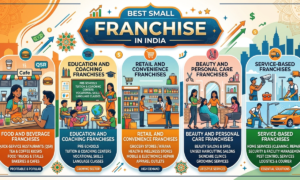
There is no single franchise category that is best for every entrepreneur. The right choice depends on your budget, skills, location, customer demand, competition, and ability to manage the business. The following categories can be useful starting points for research.
Food and Beverage Franchises
Food and beverage franchises include formats such as cafés, quick-service outlets, beverage businesses, takeaway concepts, dessert outlets, and other food-service operations. This category can be attractive because food is a regular consumer need, but food businesses also involve several operational responsibilities. Owners may need to manage ingredients, food preparation, hygiene, staffing, equipment, wastage, customer service, and delivery.
Food businesses in India also have specific food-safety requirements. FSSAI states that food business operators must obtain the applicable registration or licence under India’s food-safety framework. For this reason, anyone considering a food franchise should investigate both the franchise requirements and the regulatory requirements before opening.
Education and Coaching Franchises
Education franchises can include tutoring centres, coaching businesses, skill-development centres, early-learning formats, and other educational services. These businesses can be suitable for entrepreneurs interested in service-based operations. However, their performance can depend heavily on teaching quality, staff, student demand, location, reputation, and competition.
Before investing, understand exactly what the franchise provides. Check whether curriculum, teacher training, marketing, technology, materials, and ongoing support are included.
Retail and Convenience Franchises
Retail franchises can operate in areas such as everyday consumer products, speciality products, convenience retail, fashion, personal goods, and other categories. Location is particularly important for many retail businesses. Customer accessibility, local purchasing behaviour, nearby competitors, visibility, and occupancy costs can all affect the performance of an outlet. A well-known brand cannot automatically compensate for an unsuitable location or weak local demand.
Beauty and Personal Care Franchises
Beauty and personal-care franchises may include salons, grooming businesses, specialised beauty services, and related consumer services. These businesses often depend on customer experience and staff quality. Equipment, employee training, service standards, product costs, and repeat customers can all influence the operation. Before signing a franchise agreement, understand the staffing requirements, training process, equipment needs, product purchasing rules, and ongoing fees.
Service-Based Franchises
Service-based franchises cover a broad range of businesses, including cleaning, repair, home services, professional assistance, and other customer-focused services. Some service models may require less retail space than a conventional shop, but that does not automatically make them inexpensive. The important question is whether the service addresses a genuine local need and whether the franchise provides a practical system for delivering that service consistently.
How Much Does a Small Franchise Business Cost in India?
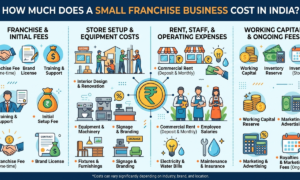
There is no single investment figure that applies to every small franchise business in India. The total cost can vary according to the franchise brand, industry, city, location, premises, equipment, staffing, inventory, franchise fees, and working-capital requirements. Rather than focusing on one advertised figure, calculate the full cost of establishing and operating the business.
Franchise and Initial Fees
A franchisor may charge an initial franchise fee as part of the agreement. The amount and purpose of this fee vary. Small franchise business in India may relate to joining the franchise system, obtaining specified rights, training, or other services. Read the agreement carefully to determine what the initial payment covers and whether additional fees apply.
Store Setup and Equipment Costs
A physical franchise may require interior work, furniture, signage, equipment, computers, point-of-sale systems, kitchen equipment, security systems, or other specialised items. The requirements can differ dramatically between industries.
For example, a food outlet may require commercial cooking equipment, while a coaching centre may have different premises and technology requirements. Ask the franchisor for a detailed setup requirement instead of relying on a general investment estimate.
Rent, Staff, and Operating Expenses
Rent and employee costs can become significant ongoing expenses. Other operating costs may include electricity, internet, maintenance, software, supplies, insurance where applicable, transportation, marketing, and inventory. Location therefore needs to be evaluated from both a customer and financial perspective. A busy location is not necessarily a good choice if the rent makes the business difficult to sustain.
Working Capital and Ongoing Fees
Working capital is the money needed to keep the business operating while revenue and expenses fluctuate. Depending on the franchise agreement, ongoing expenses may include royalties, marketing contributions, technology fees, inventory purchases, renewal charges, or other recurring payments. A realistic financial plan should include these expenses rather than considering only the initial franchise fee.
How to Choose the Right Small Franchise Business
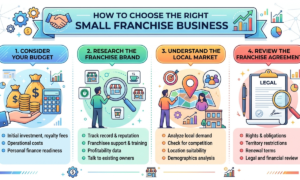
Choosing a franchise should be treated as a business decision rather than simply choosing a well-known name.
Consider Your Budget
Begin with the amount you can realistically invest. Separate the money needed for opening the business from the money required to operate Small franchise business in India during the early period. A franchise that looks affordable because of a low entry fee may require significantly more capital once rent, equipment, staff, inventory, marketing, and working capital are included.
Research the Franchise Brand
Research the franchisor before making a commitment. Look at its business history, ownership, reputation, existing outlets, customer feedback, operating model, support system, and financial requirements. Do not depend exclusively on information supplied by a franchise salesperson. Compare claims with information you can independently verify.
Understand the Local Market
A franchise that works well in one location may not perform in another. Study the target area’s customers, competition, pricing, accessibility, population, purchasing behaviour, and demand for the proposed product or service. Local research is particularly important when the business depends on physical customers visiting an outlet.
Review the Franchise Agreement
The franchise agreement is one of the most important documents in the entire process. Review the terms covering fees, territory, branding, suppliers, operating standards, marketing, renewal, termination, transfer, dispute resolution, and other obligations. Do not sign simply because the franchise opportunity sounds attractive. For a significant investment, having the agreement reviewed by a qualified legal professional can help you understand your obligations before making a commitment.
How to Start a Small Franchise Business in India
Once you have identified a suitable franchise opportunity, the next step is to turn the plan into an operating business.
Choose a Business Category
Start by choosing a category that matches your budget, experience, interests, and local market. Consider whether you are comfortable with the operating hours, staffing requirements, customer interaction, inventory management, and day-to-day responsibilities. A franchise should fit the person operating Small franchise business in India as well as the market in which it will operate.
Research and Compare Franchise Opportunities
Do not stop at the first franchise you find. Create a shortlist and compare opportunities based on total investment, recurring fees, space requirements, training, support, suppliers, territory, agreement period, renewal conditions, and exit provisions. Comparing several opportunities can make Small franchise business in India easier to identify differences that are not obvious from advertisements.
Calculate the Total Investment
Prepare a detailed budget before signing the agreement.
Include:
- Initial franchise-related fees
- Property deposit and rent
- Interior work
- Equipment
- Initial inventory
- Technology
- Employee recruitment and salaries
- Licences and registrations
- Marketing
- Utilities
- Maintenance
- Working capital
- Recurring franchise fees
The objective is to understand the full financial commitment rather than focusing on the lowest advertised entry price.
Select a Location
For a physical outlet, location can influence customer access, visibility, rent, competition, and operating costs. Consider the surrounding customer base, accessibility, nearby businesses, competition, parking or transport access where relevant, and rental terms. Some franchisors may also require approval of the proposed location, so check the agreement and franchise requirements before committing to a property.
Complete the Required Setup and Registrations
The registrations and licences required depend on the type of business, business structure, location, and activities involved. For eligible enterprises, the Government of India’s Udyam system provides MSME registration. The official portal states that Udyam registration is free, paperless, based on self-declaration, and does not require a renewal process.
GST requirements depend on the nature of the business and applicable rules. CBIC guidance explains that registration requirements can depend on turnover and other circumstances, so an entrepreneur should check the rules applicable to the particular business rather than assuming that every small franchise has the same GST requirement.
If the franchise operates a food business, the applicable FSSAI registration or licence must also be considered. FSSAI provides the official system for food-business licensing and registration.
Launch and Promote the Business
Once the premises, staff, equipment, inventory, systems, and applicable registrations are ready, the outlet can prepare for launch. Use the marketing and promotional support included in the franchise agreement and combine Small franchise business in India with suitable local marketing. After opening, track sales, customer feedback, operating expenses, inventory, staffing, and other important business measures. The first months can provide valuable information about what customers actually want and where the business needs improvement.
Benefits and Challenges of a Small Franchise Business
A franchise can provide a structured way to enter business, but Small franchise business in India does not remove the responsibilities or risks of entrepreneurship.
Key Benefits of Franchising
Potential advantages include access to an established brand, a defined business model, training, operating procedures, marketing systems, and supplier relationships. For someone starting a business for the first time, these systems may provide useful guidance. The actual value, however, depends on the franchisor and the terms of the agreement.
Common Challenges to Consider
Franchisees may have less independence than owners of completely independent businesses. The franchise agreement may require the owner to follow specific branding, operating procedures, supplier arrangements, product standards, marketing rules, or other requirements. There may also be recurring fees and contractual obligations. This means a franchisee should understand not only what the franchisor provides but also what the franchisee is required to do in return.
Mistakes to Avoid When Starting a Franchise
A franchise can look attractive during the sales process, so Small franchise business in India is important to separate promotional claims from information that can actually be verified.
Choosing a Franchise Based Only on Low Cost
Low initial cost should not be the only deciding factor. A franchise with a lower entry fee may still require substantial spending on premises, equipment, staff, inventory, marketing, and working capital. Compare the complete cost of ownership.
Ignoring the Franchise Agreement
Never treat the franchise agreement as routine paperwork. Pay attention to the agreement period, renewal conditions, territory, fees, supplier restrictions, performance requirements, intellectual-property rules, termination provisions, transfer rights, and dispute procedures. If you do not understand a clause, get professional advice before signing.
Failing to Research the Market
A recognised brand does not guarantee sufficient customers in every location. Research local demand, competitors, customer preferences, pricing, accessibility, and operating costs. A franchise should make sense in the specific market where you plan to operate Small franchise business in India.
Assuming Guaranteed Profits
A franchise does not automatically guarantee profit. Actual business performance can be affected by customer demand, location, pricing, competition, staffing, operating expenses, management, and the terms of the franchise agreement. Treat any projected return as an estimate that needs careful verification rather than as a guaranteed result.
How to Evaluate a Franchise Before Investing
Due diligence should happen before money changes hands.
Check the Franchisor’s Background
Research the company behind the franchise.
Look at its business history, ownership, existing outlets, reputation, customer experience, operating model, and information provided to prospective franchisees. Check whether the information given by the sales team is consistent with information that can be independently verified.
Understand All Costs and Fees
Ask for a complete written breakdown of the financial requirements. Understand the initial franchise fee, recurring fees, marketing contributions, technology charges, equipment requirements, inventory requirements, renewal charges, deposits, and other payments. Never assume that an expense is included unless Small franchise business in India is clearly stated.
Compare Support and Training
Ask detailed questions about the support system.
Find out:
- What initial training is provided?
- Is launch assistance available?
- Who helps with site selection?
- How are employees trained?
- Is marketing support ongoing?
- What operational support is available?
- Are specific suppliers mandatory?
- What happens if the franchisee encounters an operational problem?
The answers can make a significant difference when comparing franchise opportunities.
Speak With Existing Franchise Owners
Existing franchisees can provide practical information about operating the business. Ask about their experience with training, suppliers, customer demand, operating costs, marketing, franchisor support, and day-to-day challenges. Where possible, speak with franchisees independently rather than relying exclusively on contacts provided by the franchisor.
Read more : Tally Education Courses: Everything You Need to Know Before You Start
Is a Small Franchise Business Profitable in India?
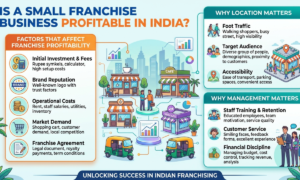
A small franchise business in India can be profitable, but profitability is never guaranteed simply because a business operates under a recognised franchise. The financial performance of each outlet depends on its particular circumstances.
Factors That Affect Franchise Profitability
Important factors can include:
- Customer demand
- Location
- Pricing
- Sales volume
- Gross margins
- Rent
- Employee costs
- Inventory costs
- Franchise royalties
- Marketing expenses
- Local competition
- Working-capital requirements
- Management quality
The most useful approach is to create a realistic financial model using verified costs and reasonable assumptions for the specific location.
Why Location and Management Matter
Two outlets belonging to the same franchise can have very different results. They may face different rents, customer groups, competitors, operating costs, and levels of demand. Management also matters. Staffing, customer service, inventory control, cost management, marketing, and daily supervision can all influence the performance of an outlet. For that reason, an entrepreneur should evaluate the franchise as a local business rather than assuming that another outlet’s performance will automatically be repeated.
Final Thoughts
A small franchise business in India can provide an alternative path for entrepreneurs who want to operate an established business model rather than build an independent brand from the ground up. The important thing is to look beyond the brand name and advertised investment. A good franchise decision requires a realistic understanding of the total cost, local market, operating responsibilities, contractual obligations, available support, and potential business risks.
Before investing, compare multiple opportunities, calculate the complete financial requirement, research the franchisor, speak with existing franchisees, and carefully review the franchise agreement. Most importantly, do not choose a franchise simply because Small franchise business in India appears inexpensive or promises attractive returns. Choose an opportunity that you can realistically finance, understand, operate, and sustain in your target market.
FAQs About Small Franchise Business in India
What is the best small franchise business in India?
There is no single best option for everyone. Your choice depends on your budget, location, skills, customer demand, and the franchise terms.
How much money is needed to start a small franchise in India?
There is no fixed investment amount because costs vary by brand, industry, location, setup, and staffing. Calculate both startup costs and ongoing working-capital needs.
Which franchise businesses can be started with a low investment?
Some smaller-format food, education, retail, beauty, and service businesses may require less capital than larger franchises. Always verify the complete investment before committing.
Is a small franchise business profitable in India?
A small franchise can be profitable, but returns are not guaranteed. Demand, location, pricing, competition, operating costs, and management can all affect profitability.
What should I check before investing in a franchise?
Check the franchisor’s background, total costs, recurring fees, agreement terms, training, support, suppliers, and exit conditions. Also verify the licences and registrations relevant to the business.