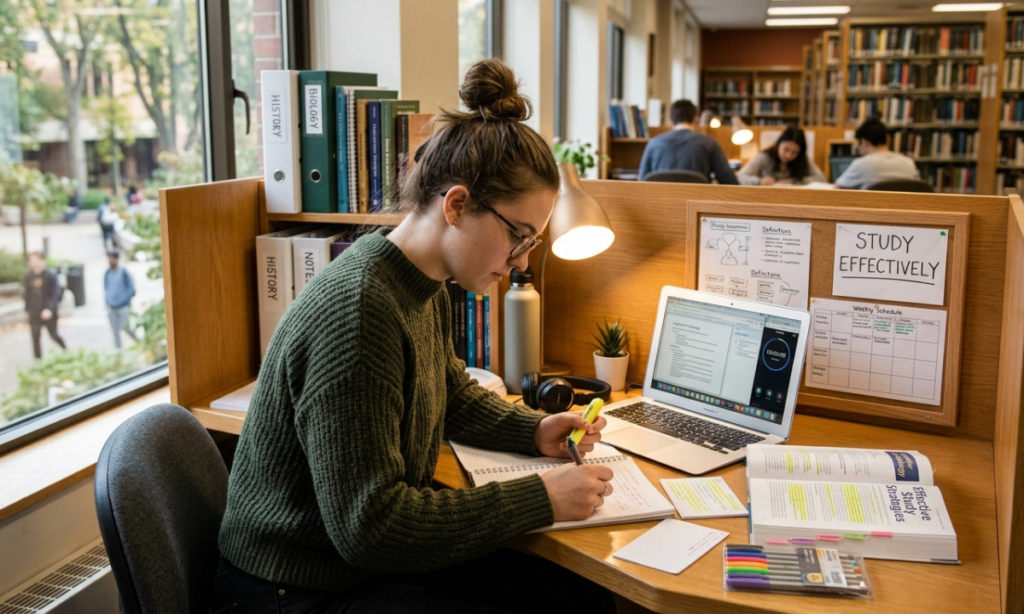

Studying at home can be a convenient way to learn, complete assignments, and prepare for examinations. However, it is not always easy to remain focused when family activities, mobile phones, television, and other distractions are nearby. Without a proper routine, students may spend several hours with their books but struggle to understand or remember what they have studied.
Learning how to study effectively at home requires more than simply sitting at a desk and reading textbooks. It involves creating a suitable environment, managing time, setting realistic goals, and choosing study techniques that support long-term learning. Small changes in daily habits can make study sessions more organized and productive.
What Does It Mean to Study Effectively?
Studying effectively means using your time and effort in ways that help you understand, remember, and apply information. It does not necessarily mean studying for long hours or reading the same chapter repeatedly. Instead, it involves choosing suitable learning methods and checking whether you genuinely understand the material.
For example, after reading a science chapter, you can close your textbook and explain its main points in your own words. You can also solve practice questions to identify topics that need more attention. These activities encourage active learning instead of relying only on passive reading.
Why Is Studying at Home Different?
Studying at home offers flexibility, but it also requires personal discipline. Unlike a classroom, where teachers organize lessons and learning activities, your home environment may not have a fixed academic structure.
You might receive interruptions from family members, household responsibilities, entertainment, or phone notifications. Some students also find it difficult to separate study time from relaxation time because both activities happen in the same place.
Benefits of Creating a Productive Home Study Routine
A productive study routine gives your day a clear structure. When you know what to study and when to study Effectively it, you can spend less time deciding what to do next.
Some important benefits include:
- Better time management: A planned routine helps you distribute study tasks throughout the day.
- Improved concentration: A consistent study environment makes it easier to begin focused work.
- Regular revision: Scheduling review sessions helps you revisit previously learned information.
- Reduced academic pressure: Completing smaller tasks regularly can prevent work from accumulating before examinations.
- Greater independence: Managing your own learning helps develop responsibility and self-discipline.
Create a Comfortable and Productive Study Space
Your study effectively environment can influence how easily you begin and maintain a learning session. A suitable space does not need expensive furniture or a separate room. Even a small, organized corner can become a useful study area. The important thing is to choose a place where you can sit comfortably, access your materials, and work with fewer interruptions.
Choose a Quiet Place for Studying
Try to select a location where conversations, television sounds, and household activities are less likely to interrupt you. A quiet bedroom corner, a small desk, or another suitable area can work well. If you share a room with family members, discuss your preferred study hours and request fewer interruptions during important sessions. You can also use earplugs or comfortable headphones when appropriate.
Keep Your Study Desk Clean and Organized
A messy desk can make it harder to find books, notebooks, pens, and other necessary materials. Before starting your work, remove unnecessary objects and keep only the items related to your current subject. Try organizing your materials into simple categories, such as textbooks, notebooks, stationery, and examination papers. Use folders or shelves if you have them.
Improve Lighting and Seating Comfort
Good lighting and comfortable seating make your study effectively area more practical. Whenever possible, use natural daylight or a suitable desk lamp so that you can read without struggling to see the page. Choose a chair that supports a comfortable sitting position. Keep your textbook or laptop at a convenient viewing height and avoid remaining in an uncomfortable position for extended periods.
Build a Realistic Daily Study Schedule
A study schedule helps you organize subjects, assignments, revision, and personal activities. Without a plan, it is easy to spend too much time on one topic while ignoring other important responsibilities. When learning how to study effectively, remember that a useful timetable should match your actual routine. A schedule that looks impressive but is impossible to follow will not help you maintain consistency.
Set Clear and Achievable Study Goals
Start each day by deciding what you want to accomplish. Instead of writing a general goal such as “study mathematics,” create a specific task such as “complete ten algebra problems and review the mistakes.”
You can divide your goals into three categories:
- Daily goals: Tasks you want to complete today.
- Weekly goals: Chapters, assignments, or topics you plan to finish during the week.
- Long-term goals: Academic targets, such as preparing for a final examination.
Choose the Best Time to Study
There is no single study Effectively time that works equally well for every student. Some people feel more alert in the morning, while others concentrate better in the afternoon or evening. Pay attention to your energy, responsibilities, and sleep schedule. Try placing difficult subjects during the periods when you feel most focused. You can reserve less demanding activities, such as organizing notes, for times when your energy is lower.
Balance Study Time With Breaks
Breaks give you an opportunity to move away from your books, stretch, drink water, and refresh your attention. Studying continuously without rest can make it harder to maintain concentration. One popular option is the Pomodoro Technique, which uses 25 minutes of focused work followed by a five-minute break. After four sessions, students commonly take a longer break.
Here is an example of a daily home study schedule:
| Time | Study activity |
| 8:00–8:30 AM | Review previous lessons |
| 8:30–9:00 AM | Mathematics practice |
| 9:00–9:10 AM | Short break |
| 9:10–9:50 AM | Science study |
| 9:50–10:00 AM | Short break |
| 10:00–10:40 AM | English reading and writing |
| 10:40–11:00 AM | Review and organize notes |
Remove Distractions While Studying at Home
Distractions are among the common challenges of home learning. A single phone notification or an unrelated conversation can interrupt your attention and make it difficult to return to the original task. A focused environment does not require removing every possible distraction. Instead, identify the interruptions that affect you most and develop practical ways to manage them.
Limit Mobile Phone and Social Media Use
Mobile phones are useful for educational videos, online classes, research, and communication. However, social media notifications and entertainment applications can interrupt study sessions. Before starting, silence unnecessary notifications and place your phone away from your desk. If you need it for learning, use only the applications related to your current task.
Avoid Television and Background Noise
Television programs, music with distracting lyrics, and loud conversations can make it difficult to concentrate on reading or solving problems. Choose a quieter location whenever possible. If you cannot avoid background noise, experiment with earplugs or low-volume instrumental sounds to see whether they help you focus.
Use Effective Study Techniques for Better Learning
The methods you use while studying are just as important as the amount of time you spend learning. Simply reading a chapter several times may create a feeling of familiarity without showing whether you can remember or apply the information. Research on learning supports techniques such as retrieval practice and spaced practice. Using these methods can make revision more purposeful.
Practice Active Recall to Improve Memory
Active recall means trying to remember information without immediately looking at your textbook or notes. It encourages you to bring previously learned information to mind. For example, after reading a history chapter, close your book and write down the important events, dates, and explanations you can remember. Then compare your answers with the original material.
Use Spaced Repetition for Long-Term Retention
Spaced repetition involves reviewing information at different intervals rather than trying to learn everything in one sitting. For example, after learning a new topic, you might review it the following day, revisit it several days later, and test yourself again the next week. The exact schedule can vary according to the difficulty of the material and how well you remember it. Topics that are difficult to recall may need more frequent review.
Try the Pomodoro Technique
The Pomodoro Technique is a time-management method that divides work into focused intervals. A common format is 25 minutes of study effectively followed by a five-minute break. During the study period, concentrate on one clearly defined task. When the timer ends, step away briefly before starting another session.
Improve Your Focus and Concentration at Home
Concentration is an important part of productive learning. However, maintaining attention throughout the day can be difficult, especially when you are tired or dealing with several responsibilities. A consistent routine, manageable tasks, and regular breaks can help you create better conditions for focused study.
Study One Subject at a Time
Choose one subject or task for each focused session. For example, if you are solving mathematics problems, avoid switching repeatedly between mathematics, social media, and unrelated reading. Working on one clear task makes it easier to understand what needs your attention.
Take Short Breaks Between Study Sessions
Short breaks can help you refresh after periods of concentration. During a break, stand up, stretch, walk around, or drink some water. Try not to replace every study Effectively break with social media scrolling. A quick check of notifications can easily become a much longer interruption.
Manage Your Time and Complete Study Goals
Time management helps students balance academic work with personal responsibilities. A realistic plan makes it easier to decide which tasks require attention first and how much time to give each one.
Prioritize Important Subjects and Topics
Not every study Effectively task has the same level of urgency. Some subjects may require more practice, while others may need only a short revision session. Begin by identifying examination dates, assignment deadlines, difficult chapters, and topics you have not fully understood.
Break Large Tasks Into Smaller Steps
A large assignment can feel overwhelming when you look at it as one complete task. Dividing it into smaller steps makes it easier to begin and monitor your progress.
For example, instead of writing “complete science project,” create a list:
- Read the project instructions.
- Research the main topic.
- Collect useful information.
- Prepare an outline.
- Write the first draft.
- Review and correct the work.
Track Your Daily Study Progress
At the end of each study effectively day, review what you completed. A simple checklist or study journal can help you record finished lessons, practice questions, and topics that need further revision. Tracking progress helps you notice patterns. For example, you may discover that certain subjects regularly take longer than expected or that your concentration is better during particular hours.
Take Care of Your Physical and Mental Health
Academic progress is not only about books, assignments, and examination results. Your physical and mental well-being also matter when developing a sustainable study Effectively routine. Trying to study continuously while ignoring sleep, meals, movement, and stress can make daily learning harder to manage.
Get Enough Sleep for Better Memory
Sleep is important for attention, memory, and overall health. Staying awake late every night to finish assignments may leave you tired and make it harder to concentrate the following day. The CDC recommends 9–12 hours of sleep for children aged 6–12, 8–10 hours for teenagers aged 13–17, and at least 7 hours for adults aged 18–60.
Eat Healthy Foods and Stay Hydrated
Regular meals and adequate hydration support general health and help you maintain energy throughout the day. Include a variety of nutritious foods in your daily meals, such as vegetables, fruits, whole grains, and suitable sources of protein. Keep drinking water available during study sessions.
Common Mistakes to Avoid When Studying at Home
Even students with good intentions can develop habits that make learning less productive. Recognizing these mistakes can help you improve your routine and use study effectively time more carefully.
Studying Without a Proper Plan
Opening a textbook without knowing what you want to accomplish can lead to unorganized study sessions. Before beginning, decide which topic you will cover and what result you want from the session. A short task list is often enough to give your study time direction.
Spending Too Much Time on One Subject
Giving all your attention to one subject may cause you to neglect other important topics. Create a balanced timetable that includes different subjects according to their difficulty, deadlines, and examination requirements. Adjust the time distribution when necessary.
Skipping Breaks and Sleep
Some students believe that studying for longer hours always produces better results. However, ignoring rest can make it harder to maintain attention and manage daily responsibilities. Plan regular breaks and protect your normal sleep schedule. A balanced routine is more practical than studying continuously until you feel exhausted.
How to Stay Motivated While Studying at Home
Motivation naturally changes from day to day. You may feel excited when beginning a new subject but find it difficult to continue when lessons become challenging. Instead of depending entirely on motivation, build simple habits that encourage you to keep making progress.
Set Small Rewards for Completing Tasks
Small rewards can make your study routine more enjoyable. For example, after completing a planned session, you might listen to music, enjoy a snack, take a walk, or spend some time on a hobby. Choose rewards that do not interfere with your next study session. The purpose is to recognize your effort while keeping your academic goals on track.
Celebrate Your Learning Progress
Progress is not limited to examination marks. Understanding a difficult concept, completing an assignment, or improving your practice-test results are also meaningful achievements. Keep a record of completed tasks and compare your current understanding with your earlier progress.
Final Thougts
Learning how to study effectively at home is a gradual process that requires planning, consistency, and the willingness to improve. You do not need an expensive study room or a complicated timetable to become a more organized learner. A comfortable workspace, realistic goals, fewer distractions, and suitable learning techniques can make a meaningful difference. Start with a few manageable changes. Organize your study materials, plan your daily tasks, practise active recall, and review lessons regularly. Remember to include breaks, physical activity, and enough sleep in your routine.
FAQs
Q1: How Can I Study Effectively at Home?
Ans: Create a quiet study space, follow a realistic timetable, and set clear daily goals. Use active recall, regular revision, and short breaks to improve your learning.
Q2: How Many Hours Should I Study at Home Every Day?
Ans: Study effectively hours depend on your age, academic level, and learning goals. Focus on understanding your lessons while maintaining a healthy balance between studying and resting.
Q3: What Is the Best Time to Study at Home?
Ans: The best time depends on when you feel most focused and energetic. Choose a consistent study schedule that fits your daily routine and allows enough sleep.
Q4: How Can I Avoid Distractions While Studying?
Ans: Keep your phone away, turn off unnecessary notifications, and choose a quiet study Effectively area. Inform family members about your study hours to reduce interruptions.
Q5: What Is the Best Study Technique for Better Results?
Ans: Active recall and spaced repetition are effective learning techniques. Combine them with practice questions and regular revision to improve understanding and long-term memory.