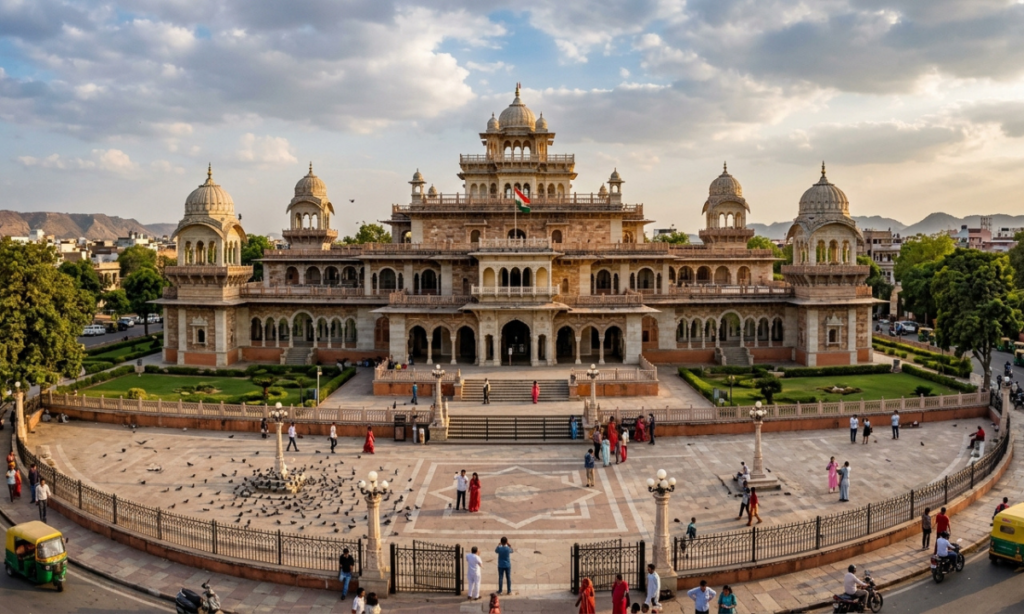

Jaipur is famous for its royal palaces, colourful markets, historic forts, and beautiful architecture. Among its many cultural attractions, Albert Hall Museum holds a special place. It gives visitors an opportunity to explore the artistic traditions, historical objects, and cultural heritage of Rajasthan in one location. Its impressive exterior and diverse collections make it an interesting destination for tourists, students, and history enthusiasts.
The albert hall museum jaipur experience is not limited to looking at old objects. Visitors can learn about traditional clothing, jewellery, paintings, sculptures, weapons, and artistic techniques that reflect different periods of history. The museum also attracts attention because of its distinctive architecture and location inside Ram Niwas Garden.
What Is Albert Hall Museum Jaipur?
Albert Hall Museum is a historic museum in Jaipur, Rajasthan, also known as the Government Central Museum. It preserves and displays a wide variety of historical and artistic objects, including traditional crafts, paintings, sculptures, textiles, jewellery, and weapons. The museum has collections representing both Indian traditions and international artistic influences. One of its notable exhibits is an Egyptian mummy, which attracts visitors interested in ancient civilizations.
The museum is particularly valuable because it brings different forms of art and historical objects together under one roof. Visitors can explore the craftsmanship, materials, and cultural practices associated with different communities and historical periods.
Where Is Albert Hall Museum Located?
Albert Hall Museum is located inside Ram Niwas Garden in Jaipur, Rajasthan, India. Its address is commonly listed as Ram Niwas Bagh, Jaipur, Rajasthan 302004. Its central location makes it convenient to include in a Jaipur sightseeing itinerary. Visitors can reach the area using local taxis, auto-rickshaws, buses, and other transportation services.
Why Is Albert Hall Museum an Important Landmark?
Albert Hall Museum is important because it preserves historical objects and represents the artistic heritage of Rajasthan. Its collections help visitors understand traditional clothing, jewellery, sculpture, painting, metalwork, and other creative practices. The building itself is also an important architectural attraction. Its design combines several architectural influences, making it different from many other historical structures in Jaipur.
History and Background of Albert Hall Museum Jaipur
The history of Albert Hall Museum is closely connected with Jaipur’s development during the nineteenth century. Its construction reflected an interest in architecture, education, art, and the preservation of traditional craftsmanship. The building gradually became an important cultural institution where visitors could discover objects representing Rajasthan and other parts of the world.
When Was Albert Hall Museum Established?
The foundation stone of Albert Hall was laid on February 6, 1876, during the visit of Albert Edward, the Prince of Wales. The building was completed in 1887, and the museum opened to the public during the reign of Maharaja Sawai Madho Singh II. These dates are important because they explain the difference between the beginning of construction and the opening of the museum.
Who Designed and Built the Museum?
Albert Hall Museum was designed by Sir Samuel Swinton Jacob, a British architect and engineer associated with several important architectural projects in Rajasthan. His design brought together Indian, Islamic, and European architectural influences. The result was a building that reflected the artistic exchange and architectural experimentation of the nineteenth century.
The Role of Albert Hall Museum in Rajasthan’s History
Albert Hall Museum plays an important role in preserving Rajasthan’s cultural and artistic heritage. Its collections include objects that demonstrate traditional craftsmanship, historical lifestyles, and artistic development.
Visitors can explore miniature paintings, traditional jewellery, textiles, sculptures, carpets, and weapons. These objects provide information about the materials, techniques, and creative traditions used by different communities.
Architectural Beauty of Albert Hall Museum
The architecture of Albert Hall Museum is one of its most recognizable features. The building stands out because of its detailed exterior, decorative elements, domes, arches, and carefully designed spaces.
Rather than following only one architectural tradition, its design combines different influences. This creates an appearance that reflects both regional craftsmanship and international architectural ideas.
Understanding Its Indo-Saracenic Architecture
Albert Hall Museum is known for its Indo-Saracenic architectural style. This approach combines elements associated with Indian, Islamic, and European architecture. The design includes decorative arches, domes, ornamental details, and features inspired by regional building traditions.
Beautiful Domes, Arches, and Stone Decorations
The exterior of Albert Hall Museum features attractive domes, arches, columns, and decorative stonework. These details give the building a grand appearance and make it an important visual landmark in Jaipur. The use of sandstone and marble contributes to its historical character. Decorative patterns and architectural details also demonstrate the craftsmanship associated with traditional Indian construction.
What Makes Its Architecture Unique?
The most interesting feature of Albert Hall Museum’s architecture is its combination of different design influences. It does not look like a conventional modern museum or a traditional palace. Its domes, arches, stone decorations, and ornamental features create a distinctive appearance. The building also demonstrates how nineteenth-century architects incorporated regional architectural traditions into public structures.
Famous Collections and Exhibits Inside the Museum
The collections inside Albert Hall Museum are among the main reasons people visit the attraction. The museum preserves objects representing different artistic traditions, materials, and historical periods. Its displays include traditional Indian craftsmanship as well as selected international objects.
The Famous Egyptian Mummy
One of the most talked-about exhibits at Albert Hall Museum is its Egyptian mummy. It provides visitors with an opportunity to learn about ancient Egyptian burial traditions and historical beliefs surrounding life and death. The museum’s collection records identify the mummy as belonging to the Ptolemaic period, dated approximately between 322 and 30 BCE. This exhibit is particularly interesting because it introduces visitors to a civilization that developed far beyond the geographical boundaries of Rajasthan.
Ancient Paintings and Miniature Art
The museum preserves miniature paintings associated with several Indian artistic traditions, including the Jaipur, Udaipur, Kota, and Bundi schools. Miniature paintings are known for their detailed compositions, careful use of colour, and small-scale artistic presentation. Many traditional paintings represent subjects such as royal life, historical events, nature, religious stories, and courtly activities.
Traditional Jewellery and Royal Costumes
Jewellery and traditional clothing provide another interesting view of Rajasthan’s cultural history. Albert Hall Museum preserves ornaments associated with different social groups, including both elite communities and ordinary people. Its textile and costume collections include traditional fabric work, embroidery, Sanganeri prints, gota work, and other decorative techniques.
Important Galleries to Explore at Albert Hall Museum
Albert Hall Museum has exhibition spaces organized around different types of collections. The Museum of India directory identifies fifteen collection categories, including textiles, jewellery, arms and armour, pottery, miniature paintings, carpets, and sculptures. Instead of treating every subject as a separate officially named gallery, visitors can explore the following collection themes to understand what the museum offers.
Textile and Costume Gallery
The textile and costume collection is particularly interesting for visitors who want to understand Rajasthan’s traditional clothing. It includes examples of decorative fabric work, embroidery, traditional prints, and other textile techniques. Sanganeri prints, gota work, and different forms of decorative stitching demonstrate the skills of regional artisans.
Sculpture and Art Gallery
The sculpture and art collections offer an opportunity to explore different periods of Indian artistic development. Visitors can find historical sculptures representing religious themes and traditional artistic practices. The miniature paintings are another highlight because they demonstrate detailed painting techniques associated with different regional schools.
Albert Hall Museum Jaipur Timings and Entry Fees
Before planning a visit, it is important to understand the museum’s operating hours, ticket arrangements, and visitor requirements. Opening times and admission charges can change, so visitors should confirm the latest details through official museum or tourism information before travelling.
Daily Opening and Closing Timings
The Incredible India tourism listing publishes the following visiting hours for Albert Hall Museum:
- Daytime visit: 9:00 AM to 5:00 PM.
- Night viewing: 7:00 PM to 9:30 PM.
Ticket Prices for Indian and International Tourists
Entry fees may vary according to visitor categories, ticket types, and changes in local admission policies. Some travel websites publish different prices for Indian and international visitors. These differences mean that an old online price should not automatically be treated as the current admission charge. It is also sensible to confirm whether students, children, groups, or visitors purchasing night-viewing tickets have separate admission arrangements.
Night Viewing and Special Visiting Hours
Night viewing is one of the attractive experiences associated with Albert Hall Museum. After sunset, the illuminated building offers a different visual experience from its daytime appearance. The lighting highlights its domes, arches, and decorative exterior. Visitors who enjoy photography may particularly appreciate seeing the building in the evening.
Ticket Booking and Visitor Information
Visitors should check the museum’s official information or the Rajasthan tourism ticketing system for current admission details.
Before purchasing tickets, confirm the following:
- The applicable admission fee.
- Whether online booking is available.
- Whether separate night-viewing tickets are required.
- Whether photography has additional restrictions.
- Whether the museum is operating on the selected date.
Best Time to Visit Albert Hall Museum Jaipur
Choosing the right time to visit can improve the overall experience. Jaipur’s weather changes throughout the year, so visitors should consider the season, temperature, and time available for sightseeing. The museum can be explored during the day, while its illuminated exterior offers another experience after sunset.
Best Season to Explore the Museum
The cooler months from October to March are generally comfortable for exploring Jaipur’s outdoor attractions. During this period, visitors can spend more time walking around Ram Niwas Garden and exploring nearby historical places. The summer months can bring high temperatures, particularly during the afternoon. Visitors travelling during this season may prefer cooler parts of the day.
Morning, Afternoon, or Evening Visits
Morning visits are suitable for people who prefer exploring museums without spending too much time outdoors in the afternoon heat. An afternoon visit can also work well if you plan to explore the galleries before the daytime closing time. Evening visits offer a different experience because the illuminated exterior creates an attractive setting for photography.
How Much Time Is Needed to Explore the Museum?
Visitors should generally allow around one to two hours to explore Albert Hall Museum. People who enjoy reading exhibit descriptions, studying paintings, or observing individual objects may want additional time. If you are visiting with family or students, planning a relaxed schedule can make the experience more enjoyable.
How to Reach Albert Hall Museum Jaipur
Albert Hall Museum is located in a central part of Jaipur, making it accessible through several transportation options. Visitors arriving from different parts of the city can use taxis, auto-rickshaws, local buses, and private vehicles. The best route depends on your starting location, traffic conditions, and preferred mode of transport.
Reaching the Museum from Jaipur International Airport
Jaipur International Airport is the main airport serving the city. Visitors arriving by air can travel towards Ram Niwas Garden using taxis, app-based cab services, or other available transportation. The journey distance and travel time depend on the selected route and traffic conditions. Using a direct taxi or cab is generally convenient for travellers carrying luggage or visiting Jaipur for the first time.
Travel Options from Jaipur Railway Station
From the railway station, travellers can reach Albert Hall Museum using auto-rickshaws, taxis, and local transportation services. The museum’s central location makes it a convenient sightseeing stop for people staying in different parts of Jaipur. If you are arriving by train, consider checking local traffic conditions before selecting your transportation option.
Top Attractions Near Albert Hall Museum Jaipur
One advantage of visiting Albert Hall Museum is its location near several other well-known Jaipur attractions. Visitors can plan a sightseeing day that combines historical buildings, gardens, religious sites, and cultural landmarks.
Ram Niwas Garden
The garden provides a pleasant outdoor environment where visitors can relax and enjoy the surroundings after exploring the museum. Its location makes it easy to include the garden in the same sightseeing visit. The combination of historical architecture and green spaces gives this area a distinctive atmosphere within the city.
Hawa Mahal
Hawa Mahal is one of Jaipur’s most recognizable historical buildings. It was built in 1799 by Maharaja Sawai Pratap Singh. The structure is famous for its five-storey exterior and numerous small windows known as jharokhas. These windows allowed women of the royal household to observe street activities without being easily seen from outside.
City Palace Jaipur
Its construction began under Maharaja Sawai Jai Singh II, the founder of Jaipur. The complex includes several courtyards, buildings, and museum spaces.
Visitors can explore royal costumes, historical objects, paintings, and other collections that reflect the city’s royal heritage. The palace provides a useful opportunity to learn more about Jaipur’s ruling families and architectural traditions.
Jantar Mantar
Jantar Mantar is a historic astronomical observatory in Jaipur and a UNESCO World Heritage Site. It was built under Maharaja Sawai Jai Singh II and contains instruments designed for astronomical observations. Visitors interested in science, mathematics, and history can find this attraction particularly fascinating.
Things to Know Before Visiting Albert Hall Museum
A little preparation can make your museum visit more comfortable and enjoyable. Before travelling, check the opening schedule, admission arrangements, and visitor guidelines. It is also helpful to plan how much time you want to spend exploring the collections.
Photography Rules and Museum Guidelines
The Museum of India directory currently lists photography and videography as not permitted. Visitors should therefore avoid assuming that cameras or mobile photography are allowed inside the galleries. It is best to confirm the current photography policy with museum staff before taking pictures.
Important Items to Carry
Visitors do not need to carry many items when exploring Albert Hall Museum.
However, a few useful things can make the visit easier:
- A valid identification document, if required for a particular ticket category.
- A mobile phone for essential travel information.
- A water bottle for use where permitted.
- Comfortable footwear for walking.
- A small bag containing personal essentials.
Facilities Available for Visitors
These include restrooms, drinking water, parking, wheelchair accessibility, a cafeteria, lockers, guided tours, and audio-visual guides. Availability and operating arrangements may change, so visitors who need a particular facility should confirm it before travelling.
Tips for Families, Students, and History Lovers
Families can make the visit more enjoyable by allowing children enough time to explore the different collections. Students may benefit from paying attention to the historical background of the objects, their materials, and their artistic techniques. History lovers should consider spending extra time in the sculpture, miniature painting, textile, and arms collections.
Here are a few practical suggestions:
- Read exhibit descriptions to understand the historical background.
- Follow museum instructions throughout the visit.
- Avoid rushing through the galleries.
- Check the latest admission details before travelling.
- Plan nearby attractions according to your available time.
Why Is Albert Hall Museum Jaipur Worth Visiting?
Albert Hall Museum is worth visiting because it combines historical architecture with an extensive variety of artistic and cultural collections. Unlike attractions that focus on only one historical period or subject, this museum presents different forms of craftsmanship and cultural expression.
Discovering Rajasthan’s Cultural Heritage
Its collections include textiles, jewellery, pottery, paintings, carpets, sculptures, and traditional weapons. These objects reflect the craftsmanship and cultural practices that developed in different communities over time. Visitors can gain a better understanding of Rajasthan’s heritage by observing how traditional materials and artistic techniques were used.
Final Thoughts
Albert Hall Museum is one of Jaipur’s important cultural and historical attractions. Its architectural beauty, diverse collections, and historical background make it an interesting destination for visitors who want to explore Rajasthan’s heritage. From the famous Egyptian mummy and miniature paintings to traditional jewellery, textiles, sculptures, and weapons, the museum offers a wide range of exhibits. Its location inside Ram Niwas Garden also makes it convenient to combine with other Jaipur sightseeing destinations.
FAQs
Q1: What Is Albert Hall Museum Jaipur Famous For?
Ans: Albert Hall Museum is famous for its historic architecture and collections of paintings, sculptures, jewellery, textiles, and pottery. Its Egyptian mummy and Persian carpet are among its most notable attractions.
Q2: Who Built Albert Hall Museum?
Ans: Albert Hall Museum was designed by Sir Samuel Swinton Jacob. Its foundation stone was laid in 1876, and the building was completed in 1887.
Q3: When Was Albert Hall Museum Opened?
Ans: Albert Hall Museum opened to the public in 1887 during the reign of Maharaja Sawai Madho Singh II. It became an important place for preserving historical and artistic collections.
Q4: What Is Inside Albert Hall Museum?
Ans: The museum displays an Egyptian mummy, miniature paintings, jewellery, textiles, sculptures, weapons, pottery, carpets, and coins. These exhibits represent different artistic traditions and historical periods.
Q5: How Much Is the Entry Fee?
Ans: The entry fee varies depending on visitor category and ticket arrangements. Check the latest official admission charges before visiting, as online prices may differ.