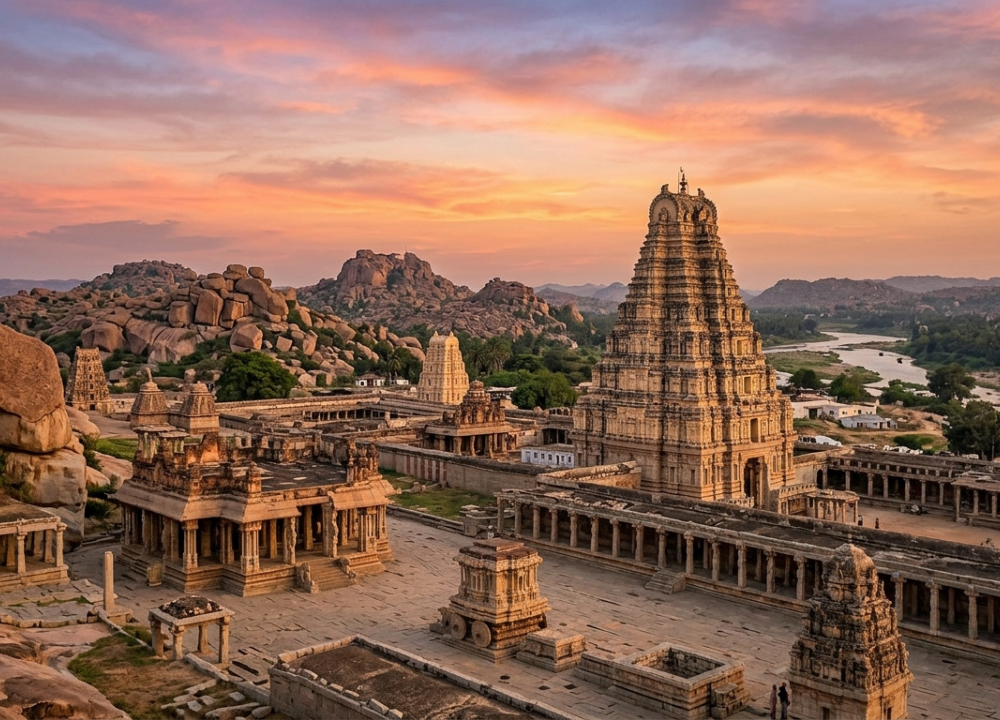

India is home to many historical places that reflect its ancient traditions, artistic achievements, and religious heritage. Among these destinations, Hampi holds a special place because of its remarkable temples, stone monuments, impressive architecture, and connection with the Vijayanagara Empire. Located in Karnataka, Hampi attracts visitors who want to understand India’s past while experiencing the beauty of its historic surroundings.
The hampi temple heritage area is not limited to a single religious building. It includes several famous temples, including Virupaksha Temple, Vijaya Vittala Temple, Achyutaraya Temple, and Hazara Rama Temple. Each monument has its own architectural features and historical background. Together, they provide an insight into the religious traditions and artistic skills that developed during the Vijayanagara period.
One of the most interesting things about Hampi is the way its temples blend with the natural landscape. Large granite rocks, hills, ancient pathways, and the Tungabhadra River create a distinctive setting. Visitors can explore beautifully carved pillars, temple towers, stone sculptures, and the remains of historic marketplaces.
Where Is Hampi Temple Located?
Hampi is located in the Vijayanagara district of Karnataka, a state in southern India. The historic settlement lies along the banks of the Tungabhadra River and is surrounded by rocky hills, open landscapes, and impressive granite formations. Its natural surroundings played an important role in the development of the ancient city.
The location of Hampi was significant for both religious and practical reasons. The river provided water, while the surrounding rocky landscape offered natural defensive advantages. These geographical features helped shape the layout of the Vijayanagara capital, including its sacred areas, residential settlements, royal buildings, and marketplaces.
Today, the Hampi temple area is part of a large archaeological landscape containing more than 1,600 surviving remains. These include temples, shrines, gateways, forts, water structures, royal buildings, and pillared halls. Visitors can explore different sections of the heritage site to understand how the historic city was organized.
History of Hampi Temple
The history of Hampi is closely connected with the development of the Vijayanagara Empire. Although the region existed as a settlement and religious destination before the empire, it became especially important after emerging as the empire’s capital during the fourteenth century. The temples developed over different periods, reflecting changes in religious practices, political power, construction methods, and artistic traditions. Understanding this history helps visitors appreciate why the monuments are so valuable.
The Origins of Ancient Hampi
Hampi has a history that goes back much further than the establishment of the Vijayanagara Empire. Historical research identifies early human activity in the surrounding region, including prehistoric settlements and ancient inscriptions. According to historical studies, an early Brahmi inscription from the area dates to approximately the second century. Later inscriptions from the eleventh to thirteenth centuries also refer to religious activities and local temples.
The Rise of the Vijayanagara Empire
The Vijayanagara Empire was established in 1336 by Harihara and Bukka Raya, according to the Vijayanagara district’s historical account. Its capital developed around the area now known as Hampi. Over time, the empire became a major political, economic, and cultural power in southern India. Its rulers supported religious institutions, encouraged artistic activities, and commissioned impressive buildings.
During the fifteenth and sixteenth centuries, the capital expanded with additional temples, royal structures, defensive walls, and commercial areas. The reign of Krishnadevaraya, from 1509 to 1529, is especially associated with major achievements in architecture and cultural development.
The Role of Temples During the Vijayanagara Period
Temples were important religious and cultural institutions during the Vijayanagara period. They were not simply places where people gathered for worship. Large temple complexes also included halls, shrines, courtyards, water tanks, and marketplaces. Religious festivals and processions brought communities together. Wide streets and pillared structures near temples provided space for ceremonial activities and gatherings. Some temple complexes also had stepped tanks and water channels that formed part of their surroundings.
The Decline of Vijayanagara and Its Impact on Hampi
The history of Hampi changed dramatically after the Battle of Talikota in 1565. During this conflict, the Vijayanagara army suffered a major defeat against an alliance of Deccan sultanates. Following the battle, the capital experienced extensive destruction and looting. UNESCO records that the city was pillaged over a period of approximately six months before being abandoned as the imperial capital.
Famous Temples to Explore in Hampi
Hampi contains several temples that represent different aspects of Vijayanagara architecture and religious traditions. Some are known for their active worship, while others attract visitors because of their sculptures, historic inscriptions, and impressive stone construction.
Virupaksha Temple
Virupaksha Temple is one of the most important religious landmarks in Hampi. Dedicated to Lord Shiva, it is also associated with Goddess Pampadevi. The temple has religious importance that predates the establishment of the Vijayanagara Empire. One of its most recognizable features is the tall eastern gateway, known as a gopuram. The structure features multiple levels decorated with sculptures and traditional architectural details. Inside the complex, visitors can find religious shrines, pillared halls, and other historic features.
Vijaya Vittala Temple
Vijaya Vittala Temple is widely recognized for its detailed stonework and remarkable architectural design. Dedicated to Lord Vittala, a form of Lord Vishnu, it is considered one of the finest examples of Vijayanagara temple architecture. The temple complex includes a large main hall, several pillared structures, decorative carvings, and the famous Stone Chariot. The chariot is actually a shrine dedicated to Garuda, the traditional vehicle of Lord Vishnu.
Achyutaraya Temple
Achyutaraya Temple is another impressive religious monument in Hampi. It is located between Matanga Hill and Gandhamadana Hill and is associated with the reign of King Achyuta Raya. The temple was constructed in 1534 and dedicated to Tiruvengalanatha, a form of Lord Vishnu. Its large complex includes pillared halls, decorative carvings, and spacious courtyards.
Hazara Rama Temple
Hazara Rama Temple is famous for its connection with Lord Rama and the detailed stone carvings that decorate its walls. It is situated in the royal area of Hampi and is believed to have served as a private temple for the Vijayanagara rulers. The temple dates to the early fifteenth century and is associated with King Devaraya II. Its walls contain carved scenes from the Ramayana, allowing visitors to see how stories from Hindu traditions were represented through stone artwork.
Krishna Temple
Krishna Temple, also known as Balakrishna Temple, is an important monument associated with King Krishnadevaraya. It was established in 1513 to honor Lord Krishna and is connected with the ruler’s victory in the eastern campaign involving Udayagiri. The temple was dedicated to Balakrishna, representing Lord Krishna in his childhood form. Its architectural features include decorative pillars, carved stone entrances, shrines, and a large courtyard.
Architectural Features of Hampi Temple
The architecture of Hampi is one of the main reasons the destination attracts historians, photographers, architecture enthusiasts, and tourists. Its temples demonstrate the creativity of Vijayanagara craftsmen, who used locally available materials to create detailed structures that have survived for centuries.
The hampi temple architecture is particularly associated with the Dravidian style. Large entrance towers, pillared halls, stone sculptures, enclosed courtyards, and decorative gateways are some of its most recognizable features.
Traditional Dravidian Temple Architecture
Dravidian architecture is a traditional South Indian temple-building style. It commonly features large gateways, known as gopurams, enclosed temple courtyards, pillared halls, and carefully designed sanctuaries. Hampi provides several impressive examples of this architectural tradition. The temples often have large entrances that guide visitors toward the inner religious spaces. Their layouts also include halls and smaller shrines arranged around the main sanctuary.
Beautiful Stone Carvings and Sculptures
Stone carvings are among the most attractive features of Hampi’s historic temples. Skilled craftsmen created sculptures of Hindu deities, mythological characters, animals, decorative patterns, and scenes from traditional stories. The Hazara Rama Temple is particularly interesting because its walls contain detailed scenes associated with the Ramayana. Other temples feature carved pillars, religious figures, and decorative stone panels.
Impressive Pillars and Mandapas
Mandapas are pillared halls commonly found in traditional Hindu temples. They serve different religious and ceremonial purposes, including gatherings, worship-related activities, and festivals. Several Hampi temples contain beautifully designed mandapas with rows of stone pillars. The pillars often feature carvings of animals, deities, and other decorative elements.
Tall Gopurams and Temple Entrances
Gopurams are monumental entrance towers that form an important part of many South Indian temples. They are often decorated with sculptures and provide a grand entrance to the religious complex. The Virupaksha Temple has a particularly impressive eastern gopuram. Its height and detailed decorations make it one of the most recognizable architectural features in Hampi.
The Famous Musical Pillars of Vittala Temple
The musical pillars of Vijaya Vittala Temple are among Hampi’s most fascinating architectural attractions. They are located inside the famous Ranga Mandapa and are known for their association with different musical sounds. These pillars demonstrate the remarkable craftsmanship of the builders. Their carved surfaces and carefully shaped stone sections have attracted the attention of visitors and researchers interested in historical engineering.
Religious and Cultural Importance of Hampi Temple
Hampi has a strong connection with Hindu religious traditions and the cultural history of southern India. Its temples represent different forms of worship and provide evidence of the religious activities that took place during the Vijayanagara period. The importance of the hampi temple heritage area comes from the way religious buildings, festivals, community traditions, and historical architecture developed together.
Connection with Hindu traditions and mythology: Several local religious traditions connect Hampi with Pampa and Lord Virupaksha. The association between Pampa and Shiva remains an important part of the area’s religious identity. These traditional stories have helped make Hampi a significant pilgrimage destination.
Hidden Facts and Interesting Stories About Hampi Temple
Beyond its famous monuments, Hampi contains several interesting historical details that many first-time visitors may overlook. These features reveal the engineering skills, religious practices, and daily activities of the people who lived in the ancient city.
The Mystery Behind the Musical Pillars
The musical pillars inside the Vittala Temple are among the most discussed features of Hampi. They are famous for their association with different musical notes and sounds. Their construction reflects the ability of ancient craftsmen to combine artistic decoration with unusual physical properties of stone. The pillars have become an important subject of interest for people studying traditional architecture and craftsmanship.
The Stone Chariot of Vittala Temple
The Stone Chariot is one of the most recognizable monuments in Hampi. It stands inside the Vijaya Vittala Temple complex and is designed as a shrine dedicated to Garuda, the traditional vehicle of Lord Vishnu. The structure is made primarily of granite and resembles a traditional processional chariot. Its decorative details and carefully arranged stone components make it an outstanding example of Vijayanagara craftsmanship.
The Ancient Market Streets Around Temples
Another interesting feature of Hampi is its historic marketplace system. Wide streets near major temples were lined with pillared structures that formed part of the city’s commercial and religious environment. The area around Virupaksha Temple is particularly well known for its historic bazaar. Visitors can still see rows of stone structures that provide evidence of the marketplace that once existed there.
The Historical Stories Behind Temple Sculptures
The sculptures found throughout Hampi are valuable sources of historical and cultural information. They represent religious figures, mythological events, ceremonial processions, and scenes connected with traditional stories. The Hazara Rama Temple provides an especially interesting example through its Ramayana carvings. Its outer walls also include depictions of royal processions, horses, elephants, and other figures.
The Remarkable Stone Construction Techniques
Hampi’s monuments demonstrate how ancient builders worked with locally available construction materials. UNESCO identifies local granite, burnt bricks, and lime mortar among the materials used in the historic structures. Stone masonry was an important construction method. Builders shaped and arranged granite blocks to create pillars, walls, gateways, and other architectural components.
Why Is Hampi a UNESCO World Heritage Site?
Hampi received UNESCO World Heritage recognition in 1986 because of its outstanding historical, architectural, and cultural importance. The official designation is the Group of Monuments at Hampi. The site represents the remains of the former Vijayanagara capital, which was one of the most important political and cultural centers in southern India between the fourteenth and sixteenth centuries.
Historical value of the Vijayanagara ruins: Hampi Temple preserves evidence of a powerful empire that influenced the political, economic, and cultural development of southern India. Its remaining buildings help historians understand the organization and lifestyle of the former capital. Architectural and artistic importance: The temples, gateways, pillared halls, sculptures, and royal structures demonstrate remarkable craftsmanship. The Vittala Temple complex is particularly important because UNESCO recognizes it as an outstanding example of developed Vijayanagara temple architecture.
Best Time to Visit Hampi Temple
Choosing the right season can make your Hampi trip more comfortable. Since many monuments are located outdoors, weather conditions can affect how easily you explore the temples, hills, and historic streets. According to Karnataka Tourism, the winter months from October to February are generally the most comfortable time for sightseeing.
Tips for avoiding extreme heat and crowds
- Start visiting major temples early in the morning.
- Carry drinking water and wear comfortable walking shoes.
- Use sunscreen, sunglasses, and a suitable hat.
- Allow enough time to explore the larger temple complexes.
- Check local festival dates if you want to experience cultural celebrations.
How to Reach Hampi Temple
Hampi can be reached by train, road, and air. The most convenient route depends on your starting city, travel budget, and preferred transportation method. The nearby town of Hosapete serves as an important transportation connection for visitors traveling to Hampi.
Reaching Hampi by Train
Traveling by train is a practical option for visitors coming from different parts of India. Hosapete Junction is the nearest major railway station, approximately 12–15 kilometers from the main Hampi area. From the station, visitors can use local buses, taxis, or auto-rickshaws to reach their accommodation and nearby attractions.
Reaching Hampi by Road
Road travel provides flexibility for visitors who want to explore nearby destinations during their trip. Hampi is connected to other parts of Karnataka through regional roads and highways. According to Karnataka Tourism, the distance from Bengaluru to Hampi is approximately 340 kilometers. The journey generally takes around six to seven hours by car, depending on traffic and road conditions.
Reaching Hampi by Air
Air travel can be convenient for visitors coming from distant cities. Jindal Vijaynagar Airport, also known as Vidyanagar Airport, is one of the nearest airport options and is approximately 40 kilometers from Hampi. Another option is to travel through a larger airport and continue the journey by road. The most suitable airport depends on available flights and your departure location.
Important Travel Tips for Visiting Hampi Temple
A little preparation can make your visit to Hampi more enjoyable. The heritage area contains several attractions spread across different locations, so visitors should plan their time carefully.
Final Thoughts
Hampi is one of India’s most remarkable historical destinations, offering a fascinating combination of ancient architecture, religious traditions, and cultural heritage. Its temples provide valuable insight into the achievements of the Vijayanagara Empire and the artistic skills of the craftsmen who created these impressive monuments. From the religious importance of Virupaksha Temple to the beautiful stone carvings of Hazara Rama Temple and the famous Stone Chariot at Vijaya Vittala Temple, every monument has something different to offer.
FAQs
Q1: What Is Hampi Temple Famous For?
Ans: Hampi is famous for its ancient temples, beautiful stone architecture, detailed sculptures, and Vijayanagara Empire history. Virupaksha Temple, Vittala Temple, and the Stone Chariot are its major attractions.
Q2: Who Built the Famous Temples in Hampi?
Ans: Several Vijayanagara rulers contributed to the development of Hampi’s temples. Kings such as Krishnadevaraya and Devaraya II supported the construction and expansion of important monuments.
Q3: Which Is the Most Famous Temple in Hampi?
Ans: Virupaksha Temple and Vijaya Vittala Temple are among the most famous temples in Hampi. They are popular for their religious importance, remarkable architecture, and historical features.
Q4: Why Is Virupaksha Temple Important?
Ans: Virupaksha Temple is important because of its long religious history and connection with Lord Shiva. It remains an active place of worship and an important pilgrimage destination.
Q5: What Is Special About the Vittala Temple?
Ans: Vittala Temple is famous for its impressive stone architecture, musical pillars, and iconic Stone Chariot. Its detailed carvings and large pillared halls showcase Vijayanagara craftsmanship.